ROLE
Frontend Product Engineer
Owned the visual strategy language, graph editor, contextual authoring, AI-editing UX, validation and recovery states. Also implemented the supporting compiler, execution runtime and backend services.
Build trading strategies as visual graphs, with graph validation, backtesting and paper trading in one workflow
ROLE
Frontend Product Engineer
Owned the visual strategy language, graph editor, contextual authoring, AI-editing UX, validation and recovery states. Also implemented the supporting compiler, execution runtime and backend services.
PRODUCT SCALE
162 typed nodes across 23 categories
A typed graph spans market data, transforms, conditions, risk controls and execution actions.
STATUS & PROOF
- Private prototype
- Hackathon 3rd place:
Placed third at the Synthdata hackathon for the integration built during the event.
TEAM
2-person product team
My teammate led business strategy, GTM and investor communication.
SELECTED TECHNOLOGY
Next.js · TypeScript · React Flow · Express · PostgreSQL · Redis · Polymarket APIs · Synthdata
PRODUCT PROBLEM
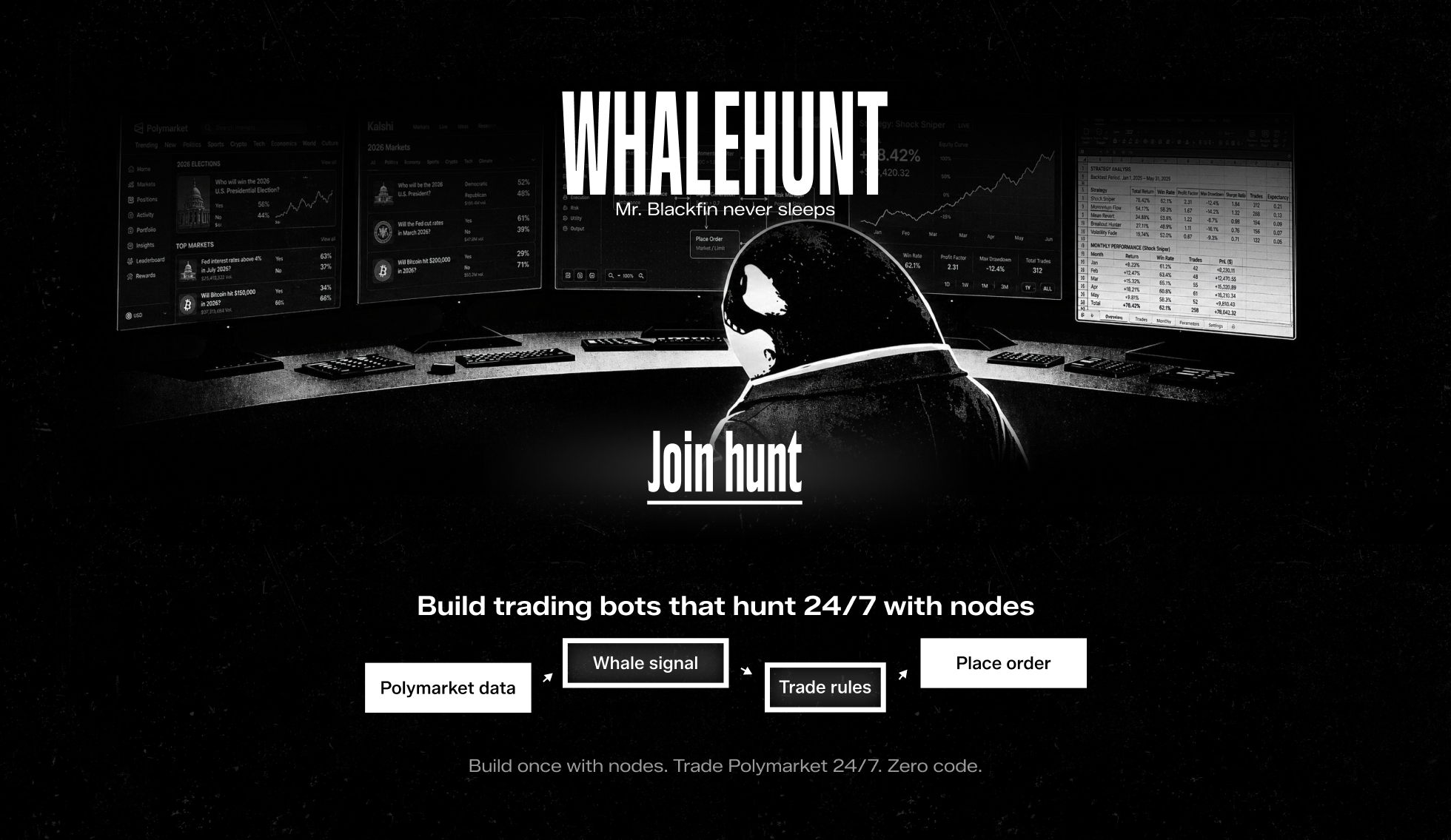
Building a single trading strategy often means building the platform around it
Turning an idea into a working strategy means writing code, integrating market data, setting up backtesting and paper trading, hosting the strategy, and dealing with the technical details of runtime failures.
PRODUCT RESPONSE
Build, test and run strategies in one visual workflow.
In Whalehunt, strategies are built as typed node graphs instead of code. Traders can create them manually or ask an AI agent to build and edit the graph, then run the same strategy through built-in validation, backtesting and paper trading.
ONE PRODUCT FLOW
DESCRIBE -> BUILD -> VALIDATE -> BACKTEST / PAPER TRADE
Live trading is not implemented in this prototype.
USER PROBLEM
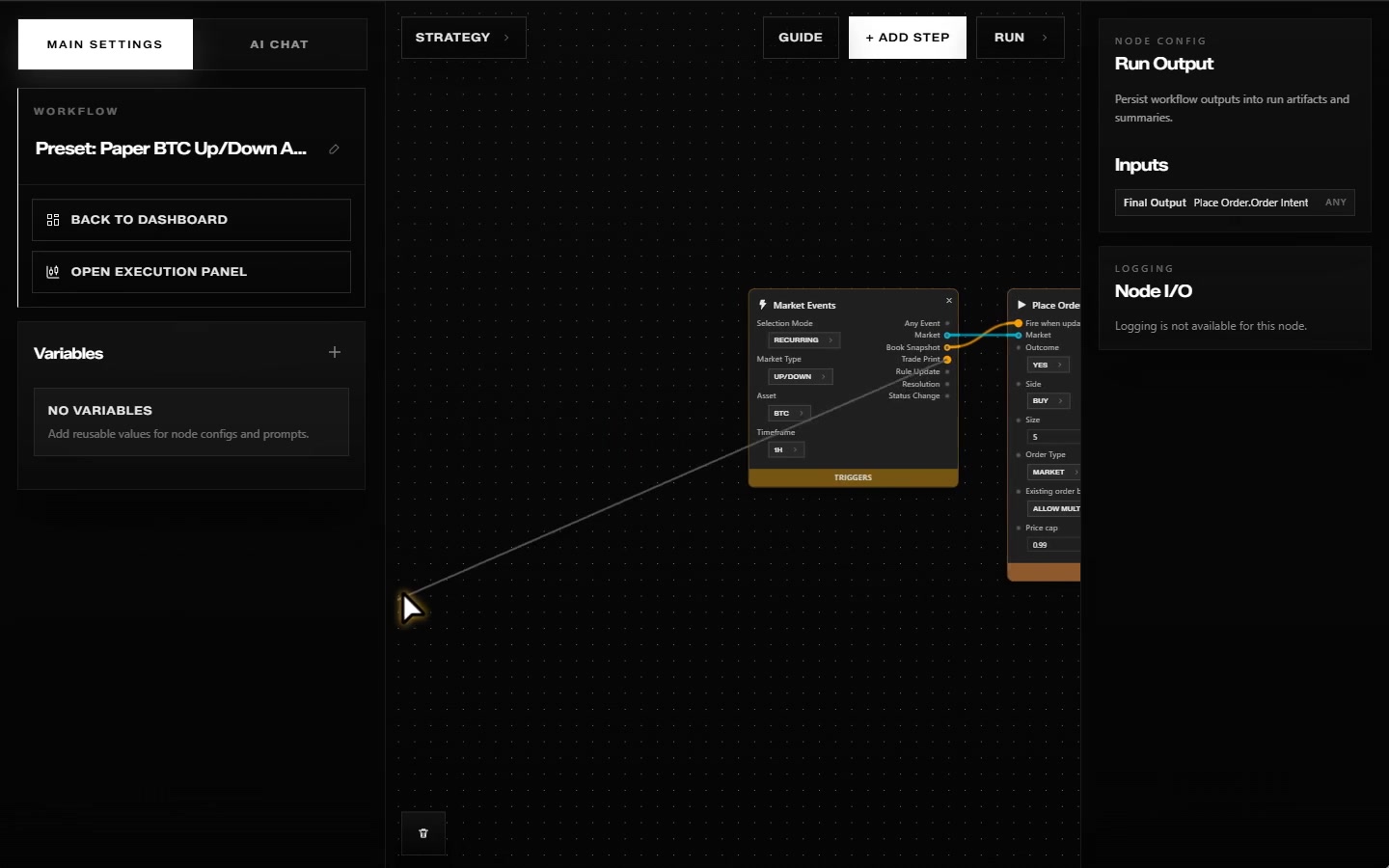
Finding the next node required browsing the catalog and manually comparing options.
PRODUCT DECISION
Let users discover the next step directly from the connection they are making.
TECHNICAL MECHANISM
Filter out incompatible nodes using port type and graph context, then rank the remaining options by relevance to the current connection and strategy state.
RESULT
Users can extend a strategy without searching the full catalog or manually checking which nodes can connect.
USER PROBLEM
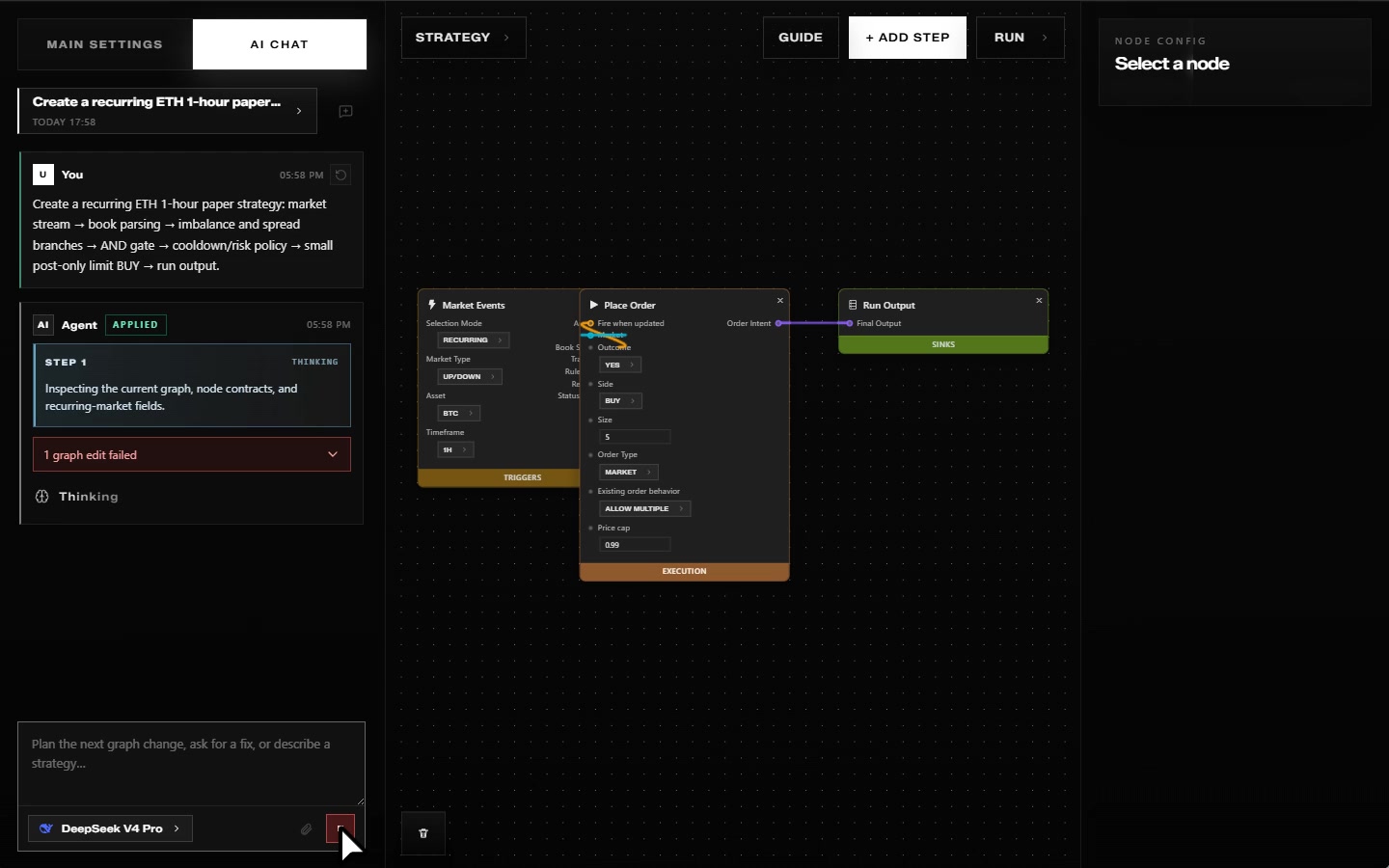
AI-generated edits can fail validation, leaving the user to identify the problem and ask the agent to fix it manually.
PRODUCT DECISION
Let the AI recover from invalid edits itself instead of passing validation errors back to the user.
TECHNICAL MECHANISM
The validator returns structured errors to the AI, which uses the feedback to revise and retry the operation.
RESULT
Operations that fail validation are rejected before they modify the graph; failed proposals leave no partial changes.
USER PROBLEM
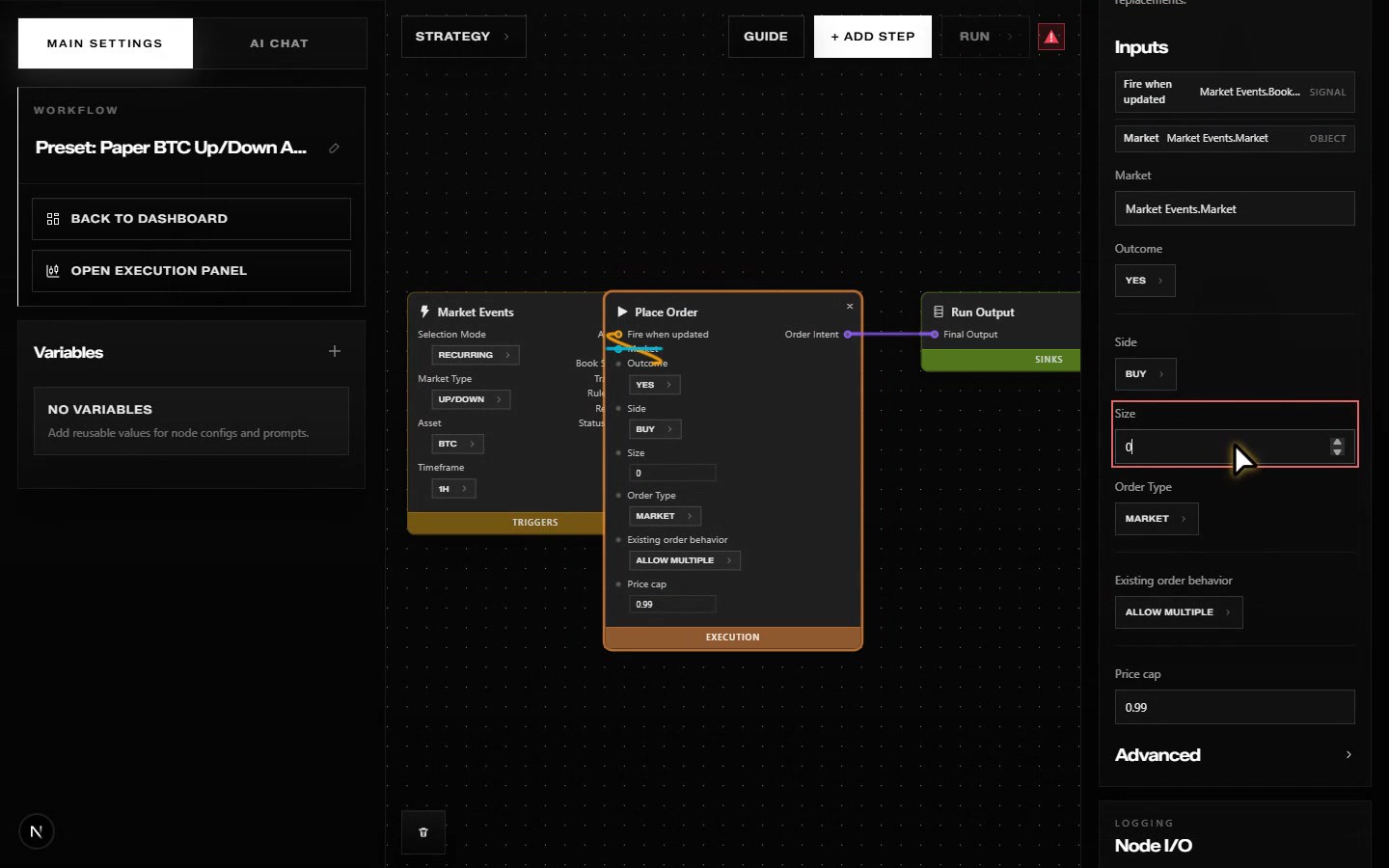
A runtime error may appear in one node while the real cause sits several steps upstream, making it very hard to trace from logs alone.
PRODUCT DECISION
Bring the full error path back into the graph, showing where the failure surfaced and which upstream value caused it.
TECHNICAL MECHANISM
Runtime events preserve references to the node, input, and originating value, allowing the editor to reconstruct the failure in context.
RESULT
Runtime errors appear in an error indicator above the graph. Hovering over an issue automatically focuses the affected node.
PROBLEM
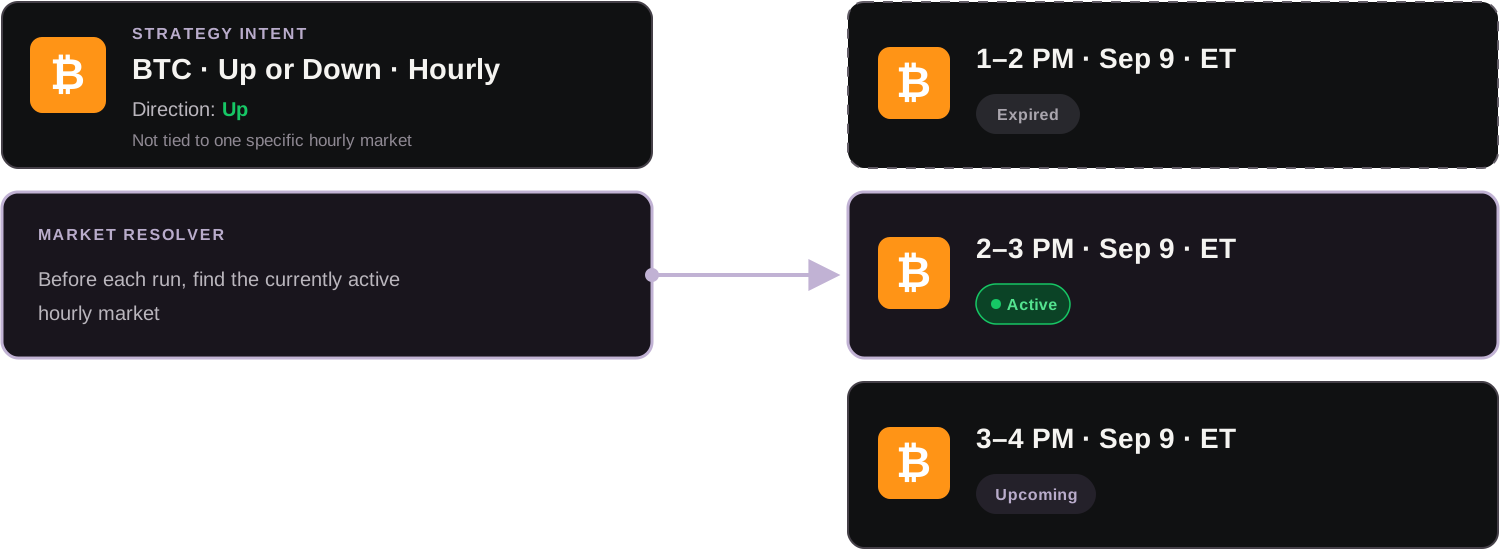
Prediction markets are short-lived: a BTC 1-hour market expires and is replaced by the next one, while the trading strategy itself stays relevant.
DECISION
Store the market intent — BTC, 1 hour, Up/Down — instead of tying the strategy to one specific market. Before each run, Whalehunt finds the currently active one.
RESULT
The same strategy keeps running as new market intervals replace expired ones.

OUTCOME
An end-to-end strategy-authoring prototype
Market selection, typed graph authoring, AI-assisted editing, validation, historical backtesting and streaming paper trading worked as one inspectable workflow.
PROTOTYPE BOUNDARY
Live trading and target-user validation remain unproven
Production real-money execution was not implemented, and the prototype was not validated through target-user usability testing.